By: Kelly Kearney
Q) We’re back in Westeros, but this time from the perspective of the common people. What elements did you seek to include that would remind us of the previous series and what would maintain the unique personality of this project? Do you think that “A Knight of the Seven Kingdoms” is actually a good entry point for an audience that is unfamiliar with Westeros?
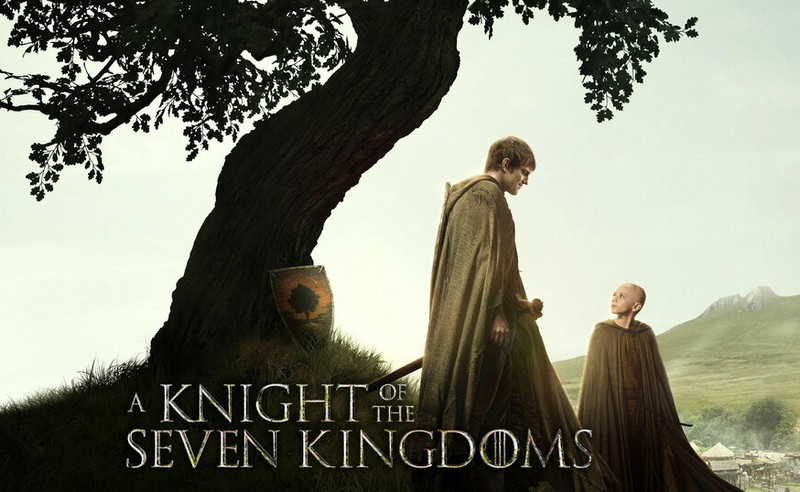
IRA PARKER: I think, I hope, that it makes an excellent entry point, an excellent on-ramp for people who did not come to Game of Thrones the first time or the second time for whatever reason. Partly because we’re fairly simple and straightforward in our approach. We have one POV character in Ser Duncan the Tall, and Egg gets a couple throughout. But for the most part, we’re telling one story. And it just allows people a little bit more clarity as to what we’re following. And Dunk is just such an immediately likable human being. He’s earnest and he’s honest and he has a lot of self-doubt and anxieties, which hopefully people will recognize from their own journeys in their own lives that he’s just a kid with a silly dream who wants to go out and be a knight, but he doesn’t quite know how to achieve that. He maybe doesn’t have the skill set for this yet. He knows how daunting it’s going to be, how difficult the road is ahead, and I know that my journey in life has certainly been reflected in that. But somebody who just wasn’t given everything, who can fail, and it just won’t work out. There’s nothing to fall back on. I think hopefully will attract enough attention in the beginning. Then we start having a little bit of fun in Westeros and return to the old Game of Thrones as George R. R. Martin always likes to do so well, that brutality butting right up against our happiness and hope.
Q) Being the first to bring Dunk and Egg to live action, what were the most vital or sacred dynamics, relationship dynamics, between them two that you thought that were the most important and you had to keep from the book?
IRA PARKER: No, I was just wondering if they had been brought to cartoons before, but I see what we mean by live action now. No, the most important elements was to keep–when they first meet each other, I think these two characters are actually quite lonely. And I’m not sure they both completely recognize it as that, obviously Dunk has just lost his longtime mentor and pretty much the only person in the whole world who even knows he exists. And we find Egg in a different sort of loneliness by himself. He’s been a bit abandoned. He’s a bit aimless. And the two of them come together, and I’m not sure that they see that in each other, but there’s something unconscious about, you know, the reason that they seek each other out. Really, this whole story is about family, and about the different nature of how families are made. This relationship is at its core, a knight and a squire, but that’s also a mentor and mentee, a master and apprentice. But there’s also, you know, a father and son. I think Ser Arlen was very much like a father figure to Dunk, even though that was a complicated relationship. And I think he has, he’s very protected, Dunk is now very protective over Egg. They’re also like brothers, you know? They really have a complicated relationship. And I think it all stems from Dunk not having any family to begin with, for being an orphan in Fleabottom and I think that’s sort of been his lifelong journey seeking out those relationships. And Egg, in a very unspoil-y way, also had complicated relationships with his family and is seeking out that connection that was never given to him that a lot of us are lucky enough to have in our home units.
Q) And Dexter, how did you two prepare? I mean, how do you create this connection that we can see and I can actually see it even happening right now?
PETER CLAFFEY: Yeah, I met Dexter right at the end of my auditioning process. We did a chemistry read together. It was the last little audition we had in Lucy Bevan’s office and acting in London. And obviously, I knew I’m going in to do a chemistry with the child actor. And he was nine years old at the time. But the illusion of an immature kid is completely…it dissipates very, very quickly. Dexter is such an impressive mature little man. He feels like, me and Tanzyn were saying today, it feels like you’re working with an actor that’s you know been in the industry for 50 years. He’s incredibly mature. I was so impressed at how he was able to take notes from both Owen, our first block director and Ira and I didn’t have to be that sort of, that man in the middle to try and help with relaying information or anything like that. He’s got an incredibly bright, bright future ahead of him. And I’m just, I suppose–we spent a lot of time together. We had two months of preparation. We were really lucky to have about two months preparation before we got into shooting and spent a lot a time together went to the arcades in Belfast.
DEXTER SOL ANSELL: A lot.
PETER CLAFFEY: We went to the arcades a lot. And we did horse riding every day, obviously in preparation and we did combat training. We got to do some, a lot of stuff with Cece, one of the stunt coordinators. And yeah, not just in preparation for being an on-screen relationship, I am so glad to be his friend now. And I’m very, very close with him and his family and they’re really, really good, lovely people. And I think those two months, you know they could have been quite nerve-racking. You don’t know what the relationship’s going to be like, and there’s so much importance placed on the relationship, and it just, you know, something clicked in that chemistry read, and we haven’t looked back since, and I hope people will enjoy the relationship we were able to bring to the screen.
Q) Tell us something, Dexter, about Peter.
DEXTER SOL ANSELL: Yeah, like [Peter] was saying, we would always go, to the arcades were like a big, big part of our relationship. Like we’ve said in many interviews, we really connect through that. And like Ira was saying we’re like brothers, not only like our characters, but in real life. And we just, yeah, like from the first audition, we just clicked and then we just hang out, go from going out to um, partying at my, at my place. [laughter]
PETER CLAFFEY: And then the casino and the nightclubs and everything, it’s awesome.
IRA PARKER: Who’s better at Mario Kart?
PETER CLAFFEY: I am.
DEXTER SOL ANSELL: It’s me.
PETER CLAFFEY: No it’s not.
DEXTER SOL ANSELL: It’s ME. We always have this talk, it’s me.
PETER CLAFFEY: We’ll get video of that when we go back.
DEXTER SOL ANSELL: Yeah, we’re going to get it. Ok. It’s me. It’s me. It’s me.
Q) Which is the funniest part of working with adults in this kind of big production?
DEXTER SOL ANSELL: Well, yeah, it’s weird that I’m the only kid, I guess, but because I’ve been with this for like, I know I’ve only been doing it, I’ve started doing it for only two years, but that’s like, what, like a fifth of my life? So, it’s still a big chunk. But yeah, so it feels like I’ve been with these guys for my whole life. But I guess it feels so weird because how I’m, like, so close to them all and we just feel like buddies but at the end of the day they’re all adults, so I guess that feels weird. [laughter]
Q) Ser Duncan the Tall seems like a gentle giant and at the same time, he’s atypical hero. So how did you find the character in you apart from the height which obviously was a main casting necessity, I guess?
PETER CLAFFEY: Dunk obsesses over things and worries about things a lot and has some, you, know, serious anxiety issues and I’ve got a lot of experience with that stuff. The first time we, when, when I got the job and went up with, to meet Owen and Ira, I was, like, violently ill with, with anticipation and nervousness and I suppose both Dunk and I have that in common, for sure. But I do, I really admire his moral compass and his black and white sense of chivalry and I feel like I’ve learned a lot from the character itself and I do feel that in a world as ruthless as Westeros and as vicious as it can be where there’s a lot of you know, the backstabbing nature of things and betrayal, it’s quite a beautiful and endearing thing to see a character like Dunk, who’s trying to navigate it in a moral, a good moraled, you know good valued way. For sure.
Q) There is also kind of like a coming-of-age story. Even though Dunk is, what, 20 years old in the series, maybe, was his, I think, his fictional age is around that, right?
IRA PARKER: Yeah. 16, right?
PETER CLAFFEY: Something like that yeah.
Q)16, right. 16. But yeah, there is also this kind of this journey of becoming a grown, you know, a real knight after all.
IRA PARKER: That’s a huge part of his life, it is that he is graduating into something new. He’s leaving the nest for the first time, the protection of Ser Arlen. He’s having to go out in the world and make it on his own. Really, this story is about two kids going off to a tourney.
Q) Westeros world is a world where honor is praised, but survival often demands stepping on others. So were there times in which you actually, you personally questioned whether doing the right thing actually a possible thing in Westeros? Because it seems like we never really get to do the right thing. So, did you ever morally question your own characters?
PETER CLAFFEY: Take it away, guys, Targaryen’s especially.
SAM SPRUELL: ] I think that’s one for Finn, isn’t it?
FINN BENNET: Never questioned. All very fair, all very justified. No, I don’t think honor matters most Targaryens and so I’m actually going to pass it to maybe the second most honorable character in this. I’m going to go with Shaun Thomas.
SHAUN THOMAS: I believe Raymun is very honorable, but I think his sense of survival actually is under the shackles of Stefan and when he gets to actually move around Ashford with Dunk, he kind of finds himself a little bit more free flowing and yeah, he enjoys being around Dunk.
Q) So no one else had a moral feeling?
DANIEL INGS: I guess I would say like, I think sometimes as well we almost like misremember bits of George’s writing in the original “Game of Thrones,” like you have this kind of idea in your head of the bleakness because of these big set piece moments where there’s death and carnage and chaos and that’s what’s so fun about the writing is that you never know who’s going to survive. But I think there is a kind of little gene of hope that exists in all of it and it’s really like expanded upon here. Even in “Game of Thrones,” you’ve got this desire to see the Stark kids reunited. And I think here in this one, it’s like you just want these two characters to survive. You know you want the other characters that they bump into and interact with to see that goodness in them. And so no, I didn’t question it for one second.
SAM SPRUELL: And for the morally dubious amongst, you know, quite often the Targaryen’s to feel confronted and challenged by the goodness of Dunk.
BERTIE CARVELL: It does seem to be the question at the heart of the whole thing isn’t it? Whether it’s possible to do the right thing and whether there’s a space for that. And I think it’s Dunk really who’s asking that. When watching it again the other night when we attended the premiere it really struck me that he himself is asking all the way through whether it’s a sort of naive action to follow honor? Is he just kind of kidding himself with this this dream of knighthood? So there’s possibility that the cynicism will kind of overwhelm him, and I find that very relatable in our own world, you know, I think we’re probably all asking ourselves that all the time, and whether you can find the moral courage to do the right thing, whether it feels like a wasted effort. That’s why it’s good television, it’s good storytelling, and I think a story that we kind of have a real thirst for, don’t you think, right now? Yeah, in a sort of darkening world. Thanks, Ira, we need these stories. It’s good. It’s good to be part of that.
IRA PARKER: That sounded sarcastic for a second, but then I realized you meant it.
BERTIE CARVELL: I meant it to sound sarcastic, but the truth is I’m burying the lead inside sarcasm, I really mean it. ] If you want some more sarcasm, I’ll tell you about how Sam and I prepared by going to the arcades, if you like.
Q) Who is better playing Mario Kart between you two?
PETER CLAFFEY: I would love to see you two in the arcades.
SAM SPRUELL: Oh, don’t be stupid. We’ll be in the pub, thank you.
Q) Did you come into this with the expectation of blood and gore, – which, well, we do have that–and then be surprised by the quiet moments, the funny moments, the rough-edged humor, we can also say. So, oh, did you already know? Were all of you already very prepared, you knew the story and so knew what you were–what was going to happen?
BERTIE CARVELL: I guess I’d like to say that it’s really unusual in television these days to actually see all the scripts up front, and if anyone who makes television is watching or listening to this, that’s a mad thing. It really, really counts when, as with this project, you can actually read the thing from start to finish and know what you’re a part of, because we’re all little storytelling organisms, and things are always greater than the sum of parts (unless they’re shit). And the reason they’re good is usually that everyone has brought all of their creativity to the bear. So, to have these very fully formed stories and beautifully made scripts, which, of course, continue to be worked on every day and changed, but that really helps, I think, and to know what you’re a part of. But that said, I don’t think I knew how charming and funny it would be until I saw it. As an actor in a film, it’s not like the theater where you’re the last pair of hands things pass through before an audience. In filmmaking, you’re just one of this vast team of people and you don’t really know what you’re in until you see it. So, it was delightful to come and sit and watch it and realize how charming it is and I think that’s down chemistry actually and kind of the Gods of filmmaking and very good judgment. I think it’s a beautifully made thing.
Q) How do you find the balance between the comic relief moments for Raymun and the scenes where he needs to step up and be taken seriously? That’s another character that has quite a big change.
SHAUN THOMAS: That’s a quite good question. I’ve never actually thought about how I would balance that. I mean, the writing was very good and I kind of understood Raymun pretty much straight away. And I think one thing that stood out to me is like, he really, really disliked the Targaryen’s. So, I think to get the balance of him being fun and then serious, I think it all comes from doing the right thing. And the moment he feels like somebody’s maybe doing something wrong and he feels the need to, you know, step up and try and help out and yeah, get behind Dunk mainly.
PETER CLAFFEY: I thought you, when we came into that monologue about the Targaryen’s, that was one of the, I was like… I feel like, well, to answer that question, like Sean smashed the whole thing as well in the most brilliant way, but that was one of those poignant moments for me where I went, my God, this is a different side to Raymun. Up to that point, there was this childish nature, and which is this lovely, beautiful sort of younger brother nature, but you could see there’s sort of a knowledge about the world and a venom as well, that a fight inside him and yeah that was one of those moments.
SHAUN THOMAS: I think that kind of comes from like the times when he’s, you know, that all comes from the horse situation and the anger that boils through him, and I feel like he felt comfortable opening up to Dunk about that. And yeah, it was really good because when I watch it back, I kind of see myself being playful but then in moments, I just try to like to use my eyes and try to look a little bit hard and a bit tough. [laughter] Hopefully it’s worked but yeah.
DANIEL INGS: Crushed it.
SHAUN THOMAS: Hard as nails.
Q) We’re obviously seeing two very different shows. I mean, “Game of Thrones” really, as we said before, has the politics, the epic tale, all that really – it’s a big epic tale. Well, this one really feels so much more intimate and really is a story of two people growing up together. And so how did you adapt this visual language, not just the writing, but also the visual language between that Westeros, the epic Westeros, that we’re all used to seeing and remembering and this more intimate one.
IRA PARKER: Look, like everything in this show, it all comes back to Dunk and his POV, and we don’t have that roving epic scale of going from family to family and the dead coming to kill mankind and dragons. We have one guy and some horses and a few nice trees, and it was very important for us to feel earthy. And to feel intimate came very easily because we are just following one person’s story and we’re seeing it through his eyes and trying to adhere pretty strictly to not going outside of that. We don’t have any drone shots in the series. There’s nothing, because it’s not Dunk’s POV. It’s not that we would never use something like that, but for our visual language, we want the audience to feel everything that Duncan is feeling at that moment. And so, when he is watching those knights riding down each other in the lists, we want him to feel scared. We want to see those knights looking as impressive as possible. When Dunk is laying down on the mud, we want to feel the grit under his fingernails. When he’s inside that helmet, we want to feel how heavy his breathing is, how hard his heart is beating. These are not comfortable moments. When he’s talking with Tanselle in the market we want to feel all of his awkwardness. But there’s only so much you can do with visual language, really, if it wasn’t for Mr. Peter Claffey just coming in every day and communicating so much with his body language and his eyes and his own sense of humor. We never would have been able to get out Dunk’s inner monologue, which is, of course, so important to this series. It is so important this novella.
Q) At the beginning of the first episode we hear a soundtrack that we all are very familiar with, but then there was a very strong choice there, a visual choice to smash cut the “GOT” opening theme to a big poop. So, what’s behind that?
PETER CLAFFEY: Peter was behind it.
DANIEL INGS: He did the sound for that.
PETER CLAFFEY: That’s not true.
DANIEL INGS: Zing.
PETER CLAFFEY: At the risk of giving my mother a heart attack when she sees it.
IRA PARKER: Again, this all comes back to character. That moment for Dunk is him–he’s at a crossroads and he’s picking up his master sword, and he hears that call to greatness. He hears the hero theme in his head and the script that was written actually as “Dunk hears the hero theme.” But when we went along through production and through post and we were, Dan Romer was composing Dunk’s hero theme. It was, again, a reflection of Dunk. So, it was stripped down. It was simpler. It wasn’t that big, orchestral, wonderful, heroic score. And so, it didn’t feel exactly right in this moment because this is a call to something that Dunk wants in the future. So, he hears that theme because that’s the greatest hero call that there is. And in the moment, though, he’s not a hero yet. He hasn’t done this. He hasn’t accomplished anything. And all of a sudden, when he thinks about how daunting the task front of him is going to be it makes him nervous, it turns, it gives him a [in Yiddish] shpilkis stomach and he finds himself squatting behind a tree in a very unheroic, some would say the least heroic position because at this point, Dunk is not yet a hero. He has a dream, and he wants to go do something but he hasn’t figured out exactly how to get that yet.
Q) What about you, Peter? How did you feel? I mean, because I imagine you thought, ‘Oh, wow, I’m going to be a hedge knight. I’m going to have a sword and a shield and ride horses and do a tournament and be all heroic and stuff.’ And then it’s like, well, first thing, you’re going to have some intestines problems.
PETER CLAFFEY: Yeah, I really enjoy all that kind of side of things. I think the more–I don’t really have any problem. I thought it was incredibly funny to shoot as well. And we closed the set and one of my really good friends in props, Gordo, was in front of me and I’m holding a pipe in between my legs and he’s just using it to cause this thing to come out. Looking at his face. He couldn’t look at me while during the thing because just couldn’t stop laughing and yeah It was just trying to get through without laughing. I just found that those are the, I mean, those are the kind of moments that I remember so much about the show. Those very, very like funny, funny moments they were they met at all worthwhile. But I wasn’t I wasn’t too nervous about any of those scenes because, yeah, I just think it was a good addition. And it’s good. It really is a good sort of exclamation point at the start to tell you what the story is. It’s got the greatness and the theme represents that great epic element of the battles and different things of “Game of Thrones,” which the story has. But it’s still got the humorous side, which would be the diarrhea, I suppose, after, yeah.
IRA PARKER: They wouldn’t find it so humorous.
PETER CLAFFEY: No, they wouldn’t. No, that’s not true.
Q) I mean, there is quite a deal of irreverence in this, in the whole series. And we see it in different moments. Also, I mean also the story is irreverent, I mean the story itself. For example, Tanselle, I mean Tanzyn is quite… I mean you basically cause a big shock to that world. Actually, how did you approach this series? I mean, did it feel? We are talking about something that is so strong and so well-known that it must be also, is there like a deal of anxiety to having to, you know, play a role in a story by George R.R. Martin?
TANZYN CRAWFORD: Yes, yeah, I was incredibly nervous to take on a character that is already written and people have had 20 years to think about and plan in their head. It’s quite intimidating, but I mean, it was a challenge that I really wanted to take, and I found it really fun to insert my own interpretation into Tanselle and try my best to service the book version of her while staying true to how I see her. And yeah, I mean, the character’s interesting because I mean really, I didn’t act with most of you. This is like first time I’m meeting half of you on this press tour. [laughter] So it’s interesting. I mean her role is so separate it doesn’t involve the violence in the cunning and the scheming and you know, so she just has her own creative world and I think that makes it like kind of a relief to see her on screen to know that things may be calm for just a second and then it gets back to the violence.
Q) I mean, this is a universe that is so well known, and millions of people are really attached to it. What was the biggest challenge into stepping into a character that, as Tanzyn said, is actually already written in people’s head from 20 years or more? So, you know you have a big responsibility.
SAM SPRUELL: I’ve got a really quick answer to that. The biggest challenge was not to think about it. And just to concentrate on the script and the action that Ira had written. And, you know, as soon as you start, your mind wanders to the fan base and the size of the world that you’re entering. I think the work starts to, starts to kind of not be as good and effective. And actually, you stop executing what you wanted to do in the first place. So, I think we all made a pact, whether it’s together or… or with ourselves to not worry about that.
FINN BENNET: I wasn’t part of this pact. Yeah, no, well, it was a certain caliber of actor. And then, anyway, then no, no. [laughter] Then it kind of worked its way down.
DANIEL INGS: I’m sorry, next time there’s a pact, you invite us all down, okay, it would take minutes.
SAM SPRUELL: It happened in the arcade, what can I say?
DANIEL INGS: I agree, I think you can’t really think too much about it. Actually audiences, especially if they’re huge fans, can sort of smell that if you’re trying to serve something other than the story. And the other thing to say is I suppose that Ira lives and breathes this stuff and had done such a wonderful job of bringing the books to life and on all of the characters that it was there. You know, and all we really had to do was learn our lines and smash it out and play it as best we could. And so, I don’t know, I think we didn’t talk too much about the, I don’t know, what people might be expecting from it. You’ve got to just be creative and get in there. And they created an awesome environment where the sets were sweet, and the actors were sweet and you can just kind of get on and smash it out. And then it was it was Ira’s job and Owen took him to kind of hold all of those different flavors and textures. That’s what I think.
FINN BENNET: Yeah, I guess the most amazing thing about kind of feeling the pressure fizzle away was that we had all of these pieces of the puzzle put in for us already. From George writing the character to Ira adapting the character, to Owen and Sarah directing us, to Lorna doing the costumes, and Pippa Nusile doing the wig, and when you have all the pieces of the puzzle, you’re kind of only asked to color in the final touches. And I think it was, again, it’s such a brave departure from the usual tone of “Game of Thrones” or The House of the Dragon and that takes a really solid captain, which we had in Ira, and obviously, Peter and Dexter. So, yeah, that pressure did come up for me every day. And all I could do was put my trust in incredibly brilliant people, which I did. And I felt proud, I felt proud to leave this out at the end of the day.
DANIEL INGS: I never knew you were wearing a wig.
FINN BENNET: Oh really?
DANIEL INGS: That wasn’t your hair?
FINN BENNET: I miss that wig. [talking over each other]
DANIEL INGS: I feel cheated. Between the pact and the wig
FINN BENNET: Acting a menace in that wig.
PETER CLAFFEY: It was an amazing wig.
DANIEL INGS: I don’t know where I stand anymore.
PETER CLAFFEY: Seeing that for the first time, yeah. That was another kind of real sort of, because we’re so used to Targaryen’s with that long flowing bleach blonde and there was real like Billy Idol. It was so cool.
SAM SPRUELL: I think yeah, you turned to me and said is that is that a wig too, and “I said no, it’s my hair you idiot.”
FINN BENNET: But I think yet again the attention to detail, Ira, we did like six or seven iterations of that wig. You wanted it, you had such a vision, so clear what you wanted from this and yeah, that’s a huge testament to the series.
IRA PARKER: Yeah, if it comes out and it works.
SHAUN THOMAS: One of my biggest challenges was trying to beat Dexter at 21, a game we used to always play on set. And Dexter knew all the ins and outs of this game, and I could never beat him. I think out of every game we played, I think I maybe won one game. That was about it. Let’s go.
DANIEL INGS: What is this game?
PETER CLAFFEY: You have to count to 21 but you can’t land on it.
SHAUN THOMAS: He knows, he’s got a plan behind, he has a full scheme behind, he’s a real Targaryen. What were we on? Four? Five, six, seven.
DEXTER SOL ANSELL: Eight.
SHAUN THOMAS: Nine.
DEXTER SOL ANSELL: Ten, eleven, twelve.
SHAUN THOMAS: Thirteen, fourteen, fifteen.
DEXTER SOL ANSELL: Sixteen.
SHAUN THOMAS: Seventeen.
DEXTER SOL ANSELL: Eighteen, nineteen, twenty.
PETER CLAFFEY: There you go, you can’t land the 21.
SHAUN THOMAS: He gets me every time, every single time.
FINN BENNET: Is it something to do with multiples of 4?
SHAUN THOMAS: Yeah, he’s got it all figured out. Oh, yeah. See, I’m not the most intelligent.
DANIEL INGS: I don’t know what’s happening here.
PETER CLAFFEY: You can’t land on 21 basically.
DANIEL INGS: I’m guessing it’s like maths or something.
PETER CLAFFEY: What is it? One, two, three numbers?
SHAUN THOMAS: You can only say three numbers and then whoever lands on 21 loses.
PETER CLAFFEY: Or you can say one or two.
SHAUN THOMAS: That was my biggest challenge.
IRA PARKER: These guys are playing chess all the time, too. Jeez, I don’t know.
PETER CLAFFEY: I’ve got my first win against Dex in season two that we’re shooting now, and I don’t plan on playing them again now for a while.
SAM SPRUELL: This doesn’t seem like we were actually working that hard on the show, maybe we should just move this along.
Q) You are having fun. All right, that’s good. So, there wasn’t that much pressure of you know having to play…
PETER CLAFFEY: Trust me, the pressure was very much there. Just like Dan said, I don’t know about this pact. I didn’t speak about it much while we were on set, I didn’t want to swamp it, but I’ve never ever experienced, like it was in my head the entirety of the time to come into this world that I’d loved and respected anyway beforehand, but to come in in such a pivotal role was something that I’m still trying to adapt to for sure. Yeah, I suppose just having such a great crew and such a cast kind of get yourself through it then we all sort of got each other through that.
Q) When you get a new script, how nervous are you for your character survival?” We actually have quite a high survival rate, oh, well, we can say it, right?
IRA PARKER: Now I mean look i don’t know how many Game of Thrones started with the larger roster characters you know we can’t kill everybody… Yet.
DANIEL INGS: Or can we?
Q) It will turn into a lot of grandparents.
PETER CLAFFEY: Well, I’m sure any good actor would read the book as well before the screen, so, you know, so I’m pretty sure that they kind of know at that point.
Q) Ira, very fast. What were your biggest challenges into adapting the story to the screen?
IRA PARKER: We wanted to stay faithful to the book, honestly. Other than the Belfast rain this was fun and straightforward. And once we had our tremendous cast in place, we just kept on rolling and I’m really proud of this now.
Q) Anti-heroes, it’s true, seem to dominate today’s narrative in general. And so how does in this case, we talk about a hero, a real hero. So, do we need heroes in today’s world? How much do we?
IRA PARKER: Is Dunk a hero? Dunk wants to be a hero, really badly. Does Dunk want to be hero? He’s not a hero yet. Maybe one day.
PETER CLAFFEY: He dreams about it but [Bertie] spoke quite philosophically about this the other night and then left me thinking about this a lot.
BERTIE CARVELL: What did I say?
PETER CLAFFEY: I can’t remember.
BERTIE CARVELL: Well, I tell you what I think, I think that I read this story, watch it as we did the other night, and I thought to myself, it’s sort of inviting us all to ask ourselves whether we can be a hero or what that would mean for us, whether it’s ludicrous and hubristic, naive to imagine that one can do heroic deeds? And I guess I read that in the character of Dunk that he of course he dreams of, as we all did as children, of doing heroic deeds, and then you cut to him shitting behind a tree and he’s reminded of his humanity, his mortality, his limitations and so on. And he looks around him, and he sees knights who seem more capable and grander and that’s why it’s relatable, and I think that’s why it is, yeah, it is a heroic story because it’s sort of grounded in something quite humane and mortal. And yeah, I think it would be good if we would all ask ourselves the question, what it would mean to be more heroic. And I think people all the time do things, ordinary things that are deeply heroic, actually, and the most heroism you’ll see is in, you know, just ordinary lives, it doesn’t have to be something grand. And the sum total of those things can add up to a world still existing in 2027.
*PRESS CONFERENCE*