By: Paige Zinaman
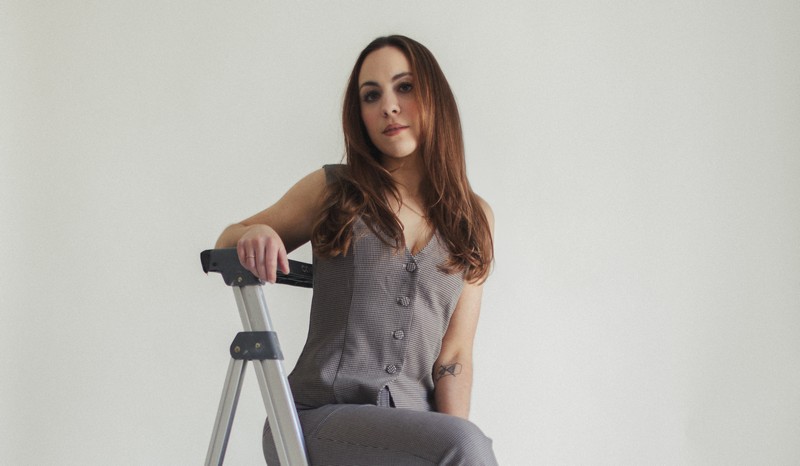
Photo By Hannah Kirk
Q) Your sound blends nostalgic indie rock influences with modern production. Which artists or songwriters have had the biggest impact on your musical identity?
A) Always Scott Hutchison from Frightened Rabbit. Brandi Carlile is also a central figure for me in terms of songwriting.
Q) Your EP Want to Be Wrong explores self-fulfilling prophecies and romantic fatalism. Was there a specific moment or experience that sparked the idea for this collection of songs?
A) It was more like death by a thousand papercuts that led to the formation of this EP. Life is exhausting for everyone right now and I think there’s a ubiquitous sense of interpersonal loneliness among people my age. So, I wanted to make music capturing that feeling, since I’ve heard the same sentiment shared by so many others.
Q) You describe the EP as balancing fear, loneliness, and exhaustion with hope and even theatrical humor. Why was it important for you to include both the darkness and the light?
A) Because sometimes you just need to laugh at the absurdity of it all! It also just adds more interest to a song when you include a moment of humor or very obvious self-awareness.
Q) Many of your songs explore depression, isolation and heartbreak, but they’re ultimately rooted in empowerment. How do you protect your own mental health while writing about such vulnerable experiences?
A) I don’t. [laughs] Jokes aside, I spend a lot of time on the Peloton, cross-training, walking and jogging. Working out is a good way to give your mind a bit of a break.
Q) You write about searching for intimacy in a world that’s more digitally connected than ever but often emotionally disconnected. Do you think music can help bridge that gap?
A) For sure. In addition to actually having to connect with other humans to make music, you also get the opportunity to connect when you share your finished art. I’ve had a few people message me after this EP and say that my music means a lot to them, and that it gave them comfort or a moment of human connection during a difficult time and that always means the world to me to hear!
Q) Critics have praised your ability to move between vulnerability, humor and defiance within a single song. Does that emotional contrast happen naturally when you write or is it something you intentionally craft?
A) It happens naturally, especially because I spend a lot of time working on each individual song. I know a lot of my singer-songwriter friends bang out songs in one sitting, but I take my time with each one. Naturally, the lyrics I write happen to correspond to whatever mood I’m in.
Q) As an LGBTQ+ artist releasing this project during Pride, what does visibility and authentic storytelling mean to you in today’s music landscape?
A) It means writing by and for other Sapphic/lesbian women. My music caters to the female gaze and I try to focus on what we want to see and hear instead of trying to appeal to a broad commercial audience.
Q) Several reviews highlight your emotionally expressive vocal delivery. When you’re recording, do you focus more on technical performance, or is capturing the emotion always the priority?
A) Usually I only have two hours to record in the studio, as session time is expensive. For that reason, I focus far more on technical performance and getting solid takes down. But being trained in opera and musical theatre techniques, the emotion naturally makes its way into my vocal delivery.
Q) You worked with producer Martin Trevox and producer/mix engineer Fede Catenaro across multiple countries. What was the biggest advantage of collaborating with an international production team?
A) Martin and Fede work with artists all over the world and I feel like they really embody the feeling of global music. For example, one of my songs on this EP, “Naomi,” had some subtle nods to yé-yé, which was essentially French/Euro girl pop of the 60s. Being based in Spain, I feel like Martin immediately understood the reference and could provide the elements I was looking for. It was overall just really fun to work with them.
Q) After listening to Want to Be Wrong, what’s one lyric or song that you hope listeners spend a little extra time sitting with—and why?
A) From “If You Wanted To You Would” – “Smoke’s not a slow burn/And far as I’m concerned/This is a damn waste of time.”
It’s a reference to the idiom “smoke and mirrors” and basically advises that if someone is acting deceptive or shady from the start, you shouldn’t convince yourself it’s just a “slow burn” type of romance and that they’ll come around eventually. They won’t. Heed my warning.
Q) If someone discovers Abby Nissenbaum through this EP for the very first time, what do you hope they understand about you—not just as a musician, but as a person?
A) That I’m weird, but earnest.
Q) What would you like to say to fans and supporters of you and your music
A) Just thank you for everything.