By: Jamie Steinberg
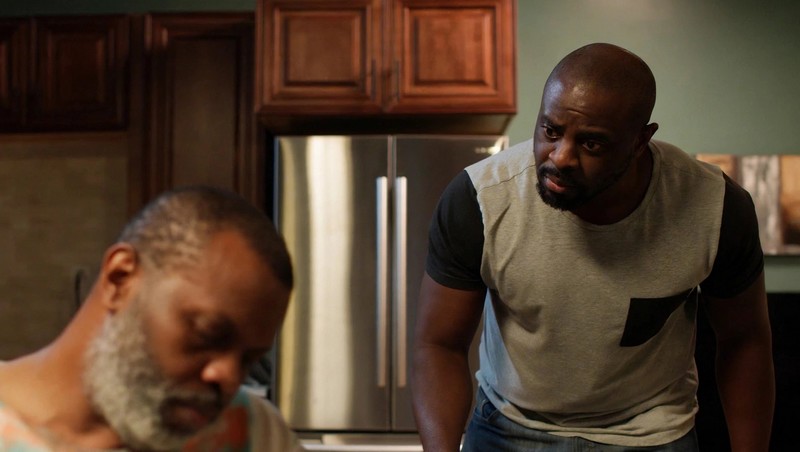
Photo Courtesy of Akeem Mair
Q) What initially inspired you to become an actor?
A) What initially inspired me to become an actor was actually a loyal customer at Ralphs grocery store where I worked part-time as a cashier. At the time, I was going to Pasadena City College to become a financial banker. Acting was not my first love. [laughs]
Michael Douglas made me want to be a banker. I watched this movie called The Game that had a huge impact on me as a kid. His gorgeous black 2000 BMW 740i became my favorite car. I started wearing suits to school because of him. I started carrying a calculator with me to visualize myself in a stock exchange office. From his personal maid who lived with him to his big fancy mansion – I wanted that life. I wanted to be a finance banker because I knew one day I’d be living like that.
But one day while working at Ralphs a loyal customer changed my destiny. I was on the register when a customer I knew quite well came through and I could tell she was in a really sad mood. So, I did what I always did – tried to brighten her day with the big, positive personality my customers loved me for. I said, “Hi, it’s so good to see you again! I hope you found everything okay?” She said quietly, “Yes, thank you.”
I told her, “Usually I see you smiling, but whatever you’re going through, I know God will pull you out of it. He’ll never give you anything you can’t handle.” After the transaction I said, “Have a blessed day, I hope to see you again!”
She just stood there frozen for a minute. Then, she finally looked at me. I could see tears in her eyes when she said, “Are you an actor?” I said, “No. Why do you ask?”
She said, “Because you have this big positive energy. You move people with it. You lifted my spirits after I just lost my home in a foreclosure today.”
Her words cut deep.
After my shift, I rushed home and just wondered – what would my life look like if I was a successful actor? I thought about how I could help millions of people with my big personality the same way I helped her.
It was that night I knew I wanted to become an actor. I searched how to get started and it led me to Central Casting.
And as they say, the rest is history.
Q) You’ve starred in a number of wonderful projects. How do you select the work you take on?
A) I select the work I take on by the character breakdown.
I’m always looking for roles like firefighter, detective, cop, attorney – any roles that feel like a superhero to me. If it’s a gangster, mob boss, or any villain role, I make sure the character can be seen as an anti-hero.
For me, I want the audience to fall in love with my character. I want to be seen as a hero and a role model, so I don’t take on roles that go against that. From there, I look for roles that push my limits as an actor. Roles that make me grow and force me to practice and get better so I can truly shine in that role.
My ultimate goal is to one day hold an Academy Award in the palm of my hands, so I make sure every role I take on is a step toward that.
Q) We’re going to be seeing you shortly in the film The Grim Rapper. How was your character Brotha Will originally described to you?
A) Brotha Will wasn’t the character I initially auditioned for in the film. I actually auditioned for the lead role, D.A. Mann, who is also the Grim Rapper himself.
The director, Hugo Velazco, said I did an amazing job, but I was “too old” to play the role. Man, gut-wrenching to hear that. [laughs] But sometimes in Hollywood, it’s not that you’re not skilled enough to play the role you want – sometimes the way you “look” just doesn’t fit the role. You have to accept that. There’s nothing you can do at that point. Your look is your look. It’s completely out of your hands.
I was bummed when my manager, Shelley Pina, told me what the director said, but she also had good news. She said Hugo wanted to offer me the role of Brotha Will instead. He described the role as basically playing 2Pac reincarnated because this character reminded him of 2Pac while he was writing Brotha Will.
My manager Shelley taught me a great lesson that day. She said, “Don’t worry about the lead role. Take the Brotha Will role and do the best you can. Make this character shine as if it IS the lead of the film. Just take the opportunity and don’t let an opportunity go because you didn’t get what you wanted by being selfish and ungrateful.”
That was a powerful lesson that made me incredibly humble. It made me realize you will only get so far if you act ungrateful.
So I took her advice and accepted the role Hugo offered me, and I couldn’t have been happier because this role was really for me. I felt like only I could have played that role and delivered it perfectly with powerful emotion and the level of acting I brought to it. My abilities really made the character stand out, and I loved it because it pushed my limits as an actor.
Q) Was there much room for you to add your own flair to it – something you wanted to add to the character that may not have been on the page?
A) Yes, the role allowed me to add my own flair to it and just be myself. I love the director Hugo Velazco for that, because he didn’t hold me strictly to the script. He didn’t want me to go too crazy off-topic, and whenever he felt I was straying too much, he would direct me and say, “No, you’re going a little too much.” We’d both share a laugh, then I’d get back into character and bring it closer to the script.
Having a director who allows you to play with the role and make it your own is special because every actor is unique and different. And as the writer, he’s unique and different too, right? So, the best situation where a character can really shine is when you blend those unique differences together – where you’re taking in the writer and you’re also bringing in yourself as the actor.
That’s what brings the character to life. If you don’t add your own flair to it, no matter what they wrote, you can never bring it to life because it’s not you. You want the writing to become a part of who you are – that’s where you can really shine. But you also have to be a great listener, so you can fulfill the writer’s vision, too.
Q) Were you familiar at all with any of your costars before working with them on this film?
A) No, I wasn’t familiar with most of my co-stars before filming, but it was amazing working with them. They were incredible at their craft and they pushed me to become even better at my own craft.
I was familiar with Vincent M. Ward, though. He starred in “The Walking Dead” and played Suge Knight in a big Broadway play. That’s how I knew about him. He was really cool on set and I loved working with him because he was so passionate and serious about how he approached his role. He really made me feel like he was Suge Knight and
I was 2Pac in the film and you can tell our chemistry shines through the entire film.
You can feel the pressure and excitement when you work with an incredible actor like that – it makes you want to do better. They make you want to push past your limits, not to outshine or upstage them, but to make sure you’re growing and doing an amazing job just like they are.
You have to keep up with the level of your co-stars because the camera captures everything. It knows if you’re putting your best foot forward. It captures if you’re being lazy. It captures if you washed your clothes or if they’re wrinkled. And it captures the chemistry between actors. I want the chemistry between all my co-stars to be amazing.
Q) Talk about working with co-writer and director Hugo Velazco on The Grim Rapper?
A) What I learned from Hugo Velazco, the director, was that this film he wrote was about his life and about his closest friends – some who are in prison and some who are dead. This movie meant a lot to him because he had been working on it for years before it ever got greenlit. So, for him, it was such a joy to finally be directing the film that was his baby and watching it come to life.
He picked an incredible crew and cast. He couldn’t have asked for anyone better because everybody was just one big family. We were all there for Hugo, making sure his dream – his baby – was created perfectly, exactly how he envisioned it.
I remember one scene we were working on in the boss’s office. Hawthorne Slim, played by Vincent M. Ward. Hugo told me, “You need to be a little more real about it. I think you were being a little fake right there. It’s like you were trying to play a character in your head. No, I want it to be more realistic. I want it to be more you. Don’t be so loud about it – be more subtle. That will play more realistic for the scene.”
I always told Hugo, “If you see something in my acting that you don’t like, please let me know so I can correct it and get better at being Brotha Will the way you envision him.” My pride isn’t like that – I don’t not want to take direction or critique. No, I’m always finding ways to grow as an actor within the film. I’m never going to say I know what I’m doing, I’m a great actor and I don’t need any help. No, we’re all here to help each other. We all need each other to grow.
So, that’s what I learned about Hugo – he allowed me to grow and be myself while also keeping me grounded to the script, which was great for me because I learned how to bring the script and your inner self together in a scene.
You can’t leave the script entirely or add too many of your own words because that’s disrespectful to the writer, but you also have to be yourself and create a little beyond the script. A nice transfusion. You have to make it come together. Make it flow together.
Q) You also have the movie Beyond the Walls coming up which stars the iconic Keith David. What was it like working with him and did he impart any wisdom to you that you took to heart?
A) Working with Keith David in Beyond The Walls, directed by Shaun Monson, was a real treat because he was the same guy you see in interviews and in movies. He was real and tough, but at the same time very friendly.
I remember a lesson I learned on set. A background actor wanted Keith’s autograph, but he was too scared to ask him directly, so he asked one of the PAs to get it for him. When Keith David found out about it, he said, “No, I’m not signing this unless he comes and asks me himself. Don’t be afraid to take chances. Don’t be afraid to go get what you want and don’t send other people to get what you want for you because that’s just lazy. If you want something, be man enough to come and ask me yourself. Don’t hide behind anybody.”
And the guy, even though he was shaking, went up to Keith David and apologized for sending somebody else to get what he wanted. Keith made it fun, made it a joke and I just sat there and thought about it like, yeah – that’s life.
People are so scared and so afraid to go get the things they want that they’ll send other people or they’ll be lazy about it. And it’s like, no, if that’s what you want, you go get it. You stand up and be a man, be a woman about it and go get it yourself. Don’t send people to get it for you. Don’t be afraid to claim what’s yours, to go after what’s yours, to get what’s yours.
Q) What are the other upcoming projects that you have been busy working on lately?
A) My next project that I’m currently working on is called Final House, written and directed by Daniel Shearan. It’s a horror movie about the final last standing house in a zombie apocalypse.
I play a soldier captain who shows up to save this last family trying to survive these zombies – which in the movie are called “Jaw Faces.” My character shows up at the end of the film to save the day, and it was amazing working on it.
I can’t wait to see it. I can’t wait to see how it all comes together – the movie magic of how he makes those zombies come to life with the masks, how he makes the bullets come to life, how he uses the music to make the film come to life.
It was a great cast I was working with and everybody was just like one big family. We shot it on a Saturday morning and finished it up, and it was just good.