By: Lisa Steinberg
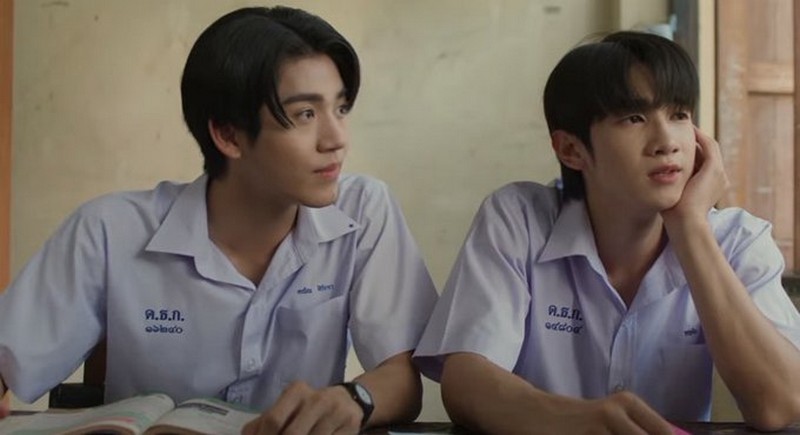
Photo Courtesy of GMMTV
Almond
Q) “When Oranges Fall” is this poignant coming of age story that really fills your heart and also tugs at it, too. When approaching the series, what really stood out that resonated with you about the characters, tone, and themes?
A) For me, it is the friend group. The warmth of this series comes from being with your friends at that age; it feels like being transported back to being a child again. Back to a time when your free time meant going out to ride bikes with your friends, finding things to do together, all without the internet.
Q) Although at first these two may seem opposite, they actually end up balancing one another really well. What ultimately is the thread that ties these two neighbors together and starts forming such a deeply rooted sustained connection?
A) I think it comes from how they complement each other and provide what the other is missing. They both come from different backgrounds and, even though they’re both loved by their families, the way that love is expressed is very different. For Ko Song, his home life may not be the warmest, so when he meets someone who can give him the understanding and support that he’s been missing, it means a lot to him. At the same time, he also brings something important into Ko Neung’s life. They help fill the gaps for each other, learn from one another and grow together. That’s why I feel their relationship is so meaningful.
Q) Ko Song is very observant, he keeps quiet but seems to always see more than he says. How did you approach your portrayal and what did you draw from when constructing your character?
A) Honestly, it was not difficult at all because I felt it already matched who I am. When I observe something, I do not really talk about it. I notice things, I take them in and then eventually I forget. If someone tells me something and you ask whether I will go tell others, I would say “no” because I have already forgotten. It simply was not my story to begin with.
Q) Ko Song is very studious and takes his school work seriously while Ko Neung tends to slack off and play around. What is it about Ko Neung that Ko Song comes to allow himself to let his guard down with him and start not always following school rules?
A) I think it is because Ko Song genuinely cares about Ko Neung, both about his studies and his life in general. That is why I feel Ko Song wants to build a future alongside Ko Neung.
Q) There is a natural wonderful chemistry between you and Progress. What do you enjoy most about working with him as a scene partner?
A) Progress is someone who is dedicated to his work, never complains, takes things seriously and knows exactly what he needs to do. That is why I enjoy working with him.
Q) Is there a scene you felt challenged you the most or one you feel particularly proud of how it turned out from script to screen?
A) I think it would be the boat scene. It was a scene that was very much in a race against time, every minute lost had real cost behind it and I put a lot of pressure on myself. But overall, I feel the result that came out was something I am proud of.
Q) The series has such sharp writing and production behind it, what has impressed you the most about this behind the scenes team?
A) Every senior crew member on set was so kind and approachable. Everyone looked after us really well. I also tried to be warm to everyone in return, greeting people when I arrived and bowing to everyone. I believe that kind of behaviour makes people see you in a good light.
Q) Do you have a favorite episode that you are excited for fans’ reactions?
A) There is one emotional scene, somewhere around Episode 6 or 7, that we put a great deal of effort into. It was a real acting challenge, but I feel we pulled it off well. I really hope everyone looks forward to watching it.
Q) What have you taken away from your experiences being a part of such a sweet and endearing meaningful series?
A) I feel I learned a lot about working in new environments and with a new team. As an actor you will encounter many directors and many different sets, each with its own working style. This series taught me patience, especially when you are shooting outdoors in the midday heat of Thailand, forty degrees, where the wind that blows feels less like a breeze and more like someone pointing a hairdryer directly at you.
Q) What do you hope lingers with fans and they take away from watching “When Oranges Fall?”
A) I hope everyone enjoys it and has a great time watching it. By “enjoy,” I mean really connecting with the characters and becoming immersed in the story. I’d love for everyone to keep an open mind and give it a chance. Please also support “When Oranges Fall.” Thank you very much.
Progress
Q) “When Oranges Fall” is this poignant coming of age story that really fills your heart and also tugs at it too. When approaching the series, what really stood out that resonated with you about the characters, tone and themes?
A) There were really two main things that stood out to me. The first was the novel itself, it is incredibly warm. I am not usually a reader, but when I read this story, it was such a feel-good experience. I found myself smiling the whole way through. The second was the script. All six of us got to sit and read it together, and it felt genuinely funny, comedic, yet also a coming-of-age story. The way the narrative follows the seasons made it feel so heartfelt and warm.
Q) Ko Neung talks a lot about meanings behind seasons, and we see many changes which start to reflect the budding potential feelings developing between the two young men. How do Ko Neung’s thoughts about the weather serve as a signifier for his emotions and view of life?
A) For me, the way the story follows the seasons reflects the growth of both the characters’ minds and bodies. Ko Neung grew up in a very warm and loving home. But we also see moments that show Ko Song’s home was not quite that same warmth. I feel that the characters’ inner thoughts grow and evolve naturally alongside themselves, just like the changing seasons.
Q) Ko Neung seems a little like the oranges he covets that fall into his yard. A little rough but on the inside a bit sour and sweet. How would you really describe how this fruit mirrors him?
A) I feel that the orange is actually one of the reasons that makes this series special. Because in a single orange, there are so many different flavors, the peel is bitter, the flesh is sour with a hint of sweetness and even the seeds are bitter. I feel that our series is like an entire orange, complete in every flavor, every dimension, just like the whole fruit.
Q) There are moments where it looks as if Ko Neung recognizes the way he feels and wants to express them. What do you think holds him back about sharing them since he usually plays them off as a deflection?
A) He wants to play it cool. He tries to act tougher and more composed than everyone else, but honestly, he is really not all that tough – because, deep down, there is a soft side to him that he keeps hidden.
Q) There is a natural wonderful chemistry between you and Almond. What do you enjoy most about working with him as a scene partner?
A) It is our differences, honestly. I feel that sometimes when two people are too similar it becomes harder to work together because when you are too close, you lose that sense of consideration for each other, that personal space. But when your personalities differ, you naturally become more mindful of each other because you do not always know what the other person needs or does not need.
Q) The series has such sharp writing and production behind it, what has impressed you the most about this behind-the-scenes team?
A) Their attention to detail and their dedication. Because this series is set in the 1990s, certain modern objects and equipment simply cannot appear on screen. And every single team, the director, camera team, lighting team, locations team, art department and welfare team – everyone was fully committed. I could feel that every single person was giving it everything they had. This team felt truly professional, and I had so much fun working with them.
Q) The pacing of the series with its slow build between Ko Neung and Ko Song is really beautifully done. How does this feel both relatable and rewarding when watching these characters start to figure things out?
A) It is because the story is so pure and uncomplicated that people find it easy to connect with. It is like watching a series where you do not have to think too hard at first. But as the later episodes arrive and the characters’ emotions mature, a kind of beautiful complexity settles in. I believe viewers will find themselves genuinely invested and feeling everything right alongside the characters.
Q) Is there a scene you felt challenged you the most or one you feel particularly proud of how it turned out from script to screen?
A) I think it would probably be a scene from EP8, but since that episode will not have aired yet when this interview is published, I’d like everyone to stay tuned for it. For the episodes that have already aired, I would choose the scene in EP6 where Ko Neung accidentally kisses Ko Song. After that, Ko Song avoids him and keeps apologizing over and over. But sometimes apologizing too much only makes things more complicated. In the end, Ko Neung finally lets all of his feelings out. It was a very intense and emotional scene for both characters.
Q) Do you have a favorite episode that you are excited for fans’ reactions?
A) I think Episode 6 and everything after that. I really want everyone to watch from that point on because the series becomes genuinely intense from there.
Q) What do you hope lingers with fans and they take away from watching When Oranges Fall?
A) I hope they take warmth with them, along with both tears and smiles. For those who were born after the 90s, they will get to discover what that era was like. For those who grew up in the 90s, they will get to revisit a familiar atmosphere and feel like it has come back to them. I feel that this series is just life that you can genuinely live and feel alongside.