By: Jessica Hatchett
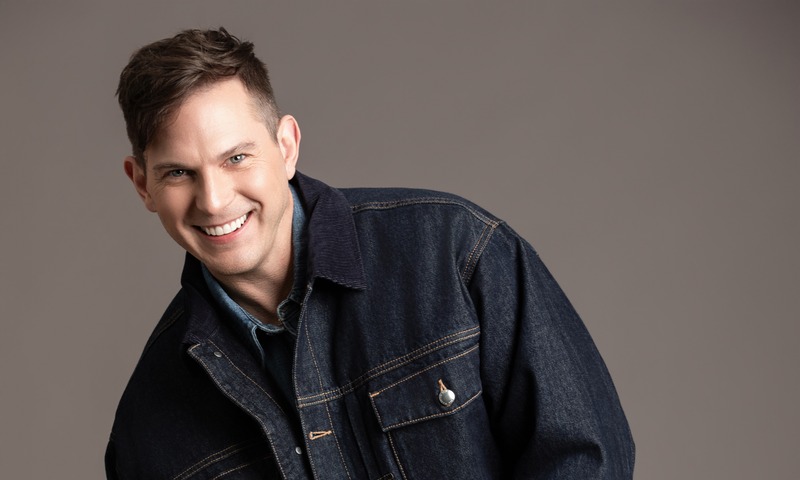
Photo By Vince Truspin
Q) You were born in Canada. How old were you when you first realized that you wanted to work in the entertainment industry and was there anything in particular that inspired you?
A) I started when I was twelve years old, teaching myself to breakdance. I would watch “Soul Train” and movies like Breakin’, Breakin’ 2: Electric Boogaloo and Beat Street over and over. Those movies really inspired me. Then, I went to the library, I found All That Jazz and watched performers like Ben Vereen. I would sit there studying those videos and teaching myself how to dance.
Eventually, I found a dance studio. It took some courage, but I jumped into every style I could. My teacher there really nurtured the versatile performer in me. By fourteen or fifteen years old, I was taking it seriously and thinking, “This is what I want to do as a career.”
Q) You’ve worked on more than four hundred film and television projects – including “Descendants,” “Julie and the Phantoms” and “The Last of Us.” How has working across such different genres helped your creative process to evolve?
A) I’ve had so many flight hours working with different personalities, different artistic opinions and completely different genres. From horror with Wes Craven, Tobe Hooper and Joss Whedon to Sucker Punch with Zack Snyder, “The Last of Us,” Wreck-It Ralph, the animated Barbie movies, and Disney’s “Descendants.” It’s a whole spectrum, from violent worlds to fairy tales.
And it’s not just movie sets. I’ve directed the Pan American Games closing ceremonies, worked with Ringling Bros. and Barnum & Bailey and worked with artists from Kanye West and the Jonas Brothers to Michael Bublé. All of those experiences have shaped who I am and the way I see things.
What you start to realize is that these worlds are more connected than you might think. Storytelling is storytelling. Look at someone like Jordan Peele moving from comedy into horror. You have to keep your eyes and ears open, but you also have to love the stories you’re telling. If you don’t enjoy horror, you probably shouldn’t be making a horror movie.
It’s given me an eclectic point of view and the reassurance that there isn’t just one path to the final answer. Different people can approach the same creative problem in completely different ways and still arrive at something great. I like having all of those experiences to draw from.
Q) LEGO® Friends: Heartlake the Musical reunites you with Kenny Ortega. What is it about your working relationship that brings you and Kenny to repeatedly collaborate with each other?
A) First of all, I wouldn’t really call it “reuniting” because we’re always working together! We share similar tastes. We’re fans of the same work and the same art and we like telling the same kinds of stories.
But we come from different eras and have different experiences, so we’re able to challenge each other’s creative vision and elevate it. We also love to laugh, which helps a lot.
There’s a trust we’ve built over the years and an expectation that we’re going to do things at a high level. That combination makes for a great collaboration.
Q) This project sets the benchmark as the LEGO® Group’s first live-action musical. What pressures did you feel to get everything “perfect?”
A) Look, the LEGO Group had high expectations and so did I. I always set a high bar for myself. But I don’t really believe in perfection. Sometimes the flaws are what make something feel right and give it character.
Making a musical is a huge undertaking. There’s a lot of money involved, a lot of people counting on you and I was wearing a lot of hats. As the director, you feel responsible. If it doesn’t work, people are going to look at you!
So, yes, there was pressure, but a lot of it was the pressure I put on myself as an artist every day. Honestly, we were moving so quickly that I didn’t have much time to dwell on it. There was always another decision to make or something to solve.
Q) How did you rise to the challenges of bringing the iconic LEGO® bricks into a live-action dance and performance world?
A) Honestly, when you have such fun settings to work with, from the Unicorn Café to Liann’s house and Heartlake City itself, there’s so much to play with. It’s colorful, bold and fun. That world actually encouraged me to take more chances with the choreography. I went the complete opposite of safe.
“One Key Lost,” performed by Marley Becker, is a great example. We brought hard hitting hip-hop into a dance montage in Heartlake City, which I don’t think people would necessarily expect. That contrast was exciting to me.
Of course, it wasn’t free rein. The LEGO Group has a history, an established brand, and existing characters that we were bringing to life. There were rules and expectations to respect. The creative challenge was finding how far we could push things while staying true to that world.
Q) In what ways did you collaborate with Final Pixel to ensure the virtual production elements blended with the live choreography and physical sets?
A) We collaborated with Final Pixel in every way, right from the beginning. While Kenny and I were developing the story, they were building the world. They were in London, so we met virtually every week. They would show us what they were building and we would give notes on each set. We even put on VR headsets and explored the world together, which was pretty incredible.
They weren’t just providing the technology. They were the production company producing the film, as well as the experts in virtual production and working with the volume wall. They were at the core of making this happen. We couldn’t have done it without them.
Q) You wore many hats for this project; directing, choreographing, co-executive producing, scriptwriting and songwriting. How were you able to balance handling so many roles at once?
A) Look, I’m a creator. When I’m making my own projects, I’m writing, editing, choreographing, directing, producing, sometimes writing the songs and sometimes performing in them, too. I’ve also worn several of those hats on other productions, so none of this felt foreign to me.
I don’t really see them as separate jobs that I have to balance. We’re making one thing, with one goal, and I’m contributing in different ways to help us get there. Being involved in the writing, music, and choreography actually helps me as a director. I understand the characters more deeply because I’ve been part of developing them. I understand the world and how everything connects.
I’d much rather be that immersed in a project than limit myself to one title. I love being in the middle of the creative process, getting my hands into it and helping bring it to life. That’s where I’m happiest.
Q) The story follows a teenager named Daisy (Jada Langley) being magically transported into a LEGO® world; how were you able to differentiate the “real world” from Heartlake City?
A) Well, it’s a LEGO world, so that already does a lot of the work for you! But we made deliberate choices in the performances and the way we shot it, too. I encouraged the actors in Heartlake City to be a little more heightened, which contrasts with the grittier reality Daisy comes from.
In the opening, we use more handheld camerawork. Her life is a little rocky, she’s going through a rough patch and I wanted the camera to reflect that. When she enters Heartlake City, we move from the 16:9 frame into a wider, anamorphic presentation. The aspect ratio changes and her world literally starts to open up.
The colors are brighter, the performances have a different energy and suddenly she’s somewhere full of possibility. That contrast follows what’s happening to her emotionally as well as physically.
Q) What was your process for co-writing three of the four original songs in the film? Did you start with the lyrics or the melody?
A) For me, the words and the character’s inner monologue always come first. What story do we need to tell? What is this person thinking or feeling? That gives me the foundation for the song.
With “Better Dancing Alone,” Kenny and I had been developing the story, so I already understood Daisy. I started writing her internal monologue and that became the lyrics. I was also humming a melody while driving near the Hollywood Hills, so the music was finding its way in, but the character and what she needed to say came first. Then I called George Kostouros and we started developing the track together.
“One Key Lost” grew out of a storytelling need too. We had a montage of the characters searching for the key and Pickles, and I wanted to choreograph it rather than simply put score underneath it. My daughter, Marley Becker, and I worked on the rap with Marley doing most of the heavy lifting and performing it, and Orin Isaacs helped produce the track.
With “Heartlake Glow,” which I worked on with George Kostouros and Alex Marshall, the lyrics and choreography started coming together in the studio. I was naming the movements as I created them and those words became part of the song. Each song developed differently, but the starting point for me was always the story.
Q) What were some of your favorite scenes to film or ones that you found the most challenging to bring from page to screen?
A) The flying scene was probably the most challenging, and it became one of my favorite moments in the film. It needed so many departments working together and it came together very quickly. On a Friday during filming we had to cut a scene and a character that we were supposed to shoot on Monday. Things change in filmmaking and suddenly I had a weekend to figure out how to get Daisy to the treehouse while still moving her story forward.
I wrote a scene where she’s beginning to think she’ll never get home. Then, she notices a pile of bricks from the flying contraption her little brother Kyle (Tyler Sullivan) had crash landed in the real world. Along with a note from her dad, she takes that as a sign. She rebuilds Kyle’s creation and uses it to fly to the treehouse. What I liked was that Daisy finds her own solution. She literally builds her way forward.
Then, we had to actually pull it off, with very little time and a pile of LEGO bricks! It took a lot of coordination across departments. That scene grew out of a problem we needed to solve, but I think it became one of the highlights of the film.
Q) Whether viewers are new to LEGO® Friends and Heartlake City or familiar with it, what lessons do you hope they will take away from the film?
A) I hope people leave feeling that they can build their own way forward, even when life doesn’t go to plan. Daisy has moved so often that she’s stopped letting people in because saying goodbye hurts. Through this adventure, she finds the courage to make friends again and trust what she has to offer.
Whether you already love LEGO® Friends or you’re discovering this world for the first time, that’s something you can connect with. Your imagination matters, friendship is worth taking a chance on and you don’t have to figure everything out alone. And, hopefully, you leave smiling and humming a few songs, too!
Q) What specific type of stories or genres do you hope to tackle in your next projects, particularly now that you have founded an AI virtual production company?
A) My taste is pretty eclectic, so there are plenty of stories I’d love to tell. I definitely want to keep making musicals, but I’m also a huge fan of action and thrillers. I love the physical storytelling in action and the tension you can build in a thriller. Coming from choreography, movement and timing are a big part of how I think, so those genres really excite me. Ultimately, I want to keep challenging myself and tell stories I’m passionate about.
Q) What would you like to say to everyone who is a fan and supporter of you and your work?
A) Thank you. So many wonderful people have followed my work and been part of my journey over the years. I get the privilege of waking up every day to create, perform and entertain and having people to share that with means everything. You’re the heartbeat of what I do.