By: Lisa Steinberg
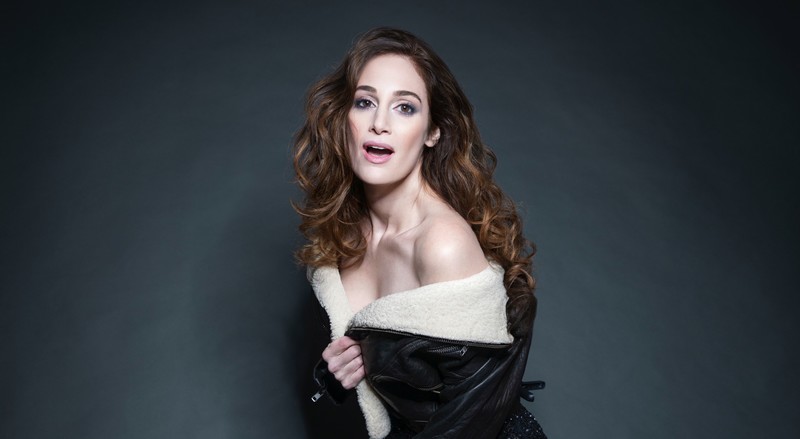
Photo By Johnny Buzzerio
Q) How would you describe your sound?
A) I suppose I’m a bit of an old soul living in a modern world. My musical roots are firmly planted in jazz, swing and the Great American Songbook, but I’ve never felt particularly obligated to stay in one musical lane and I haven’t. I love the sophistication of a beautiful orchestral arrangement, big band jazz horns and then the intimacy of a jazz trio and, as it turns out, a really good dance beat. I’ve always been drawn to music that tells a story. Whether I’m singing a torch song or something with a cheeky electronic groove, there has to be a point of view. I think my sound is ultimately a marriage of vintage glamour, contemporary sensibility, and a healthy dose of truth mixed with theatricality.
Q) Who are some of your musical influences?
A) I grew up with a tremendous appreciation for the great interpreters of song. Ella Fitzgerald, Sarah Vaughan, Frank Sinatra, Nancy Wilson, Judy Garland, Peggy Lee, and Barbra Streisand and then later Harry Connick, Jr. — they are all artists whose musicality and storytelling influenced me enormously. Also, Pavarotti and The Three Tenors albums were huge in my house growing up. Judy Garland was my first teacher, though. I watched her endlessly as a tot on a nostalgia channel. Her honesty to this day is unmatched. What fascinates me about all those performers is that they weren’t simply singing notes. They were communicating something. Every lyric meant something. Every phrase had an intention. The acting of the tale is just as important as the notes from the throat. I love most contemporary artists more for the groove of music than for their ability to communicate as singers. Amy Winehouse had IT, but we lost her too soon.
I’m also drawn to old, great composers and arrangers, particularly the lush cinematic orchestrations of another era. Ennio Morricone. Henry Mancini. Bernard Herrmann. And I appreciate artists who are unafraid to reinvent themselves or challenge what people expect from them. I think the common denominator is individuality. I love an artist who is unmistakably themselves. When I first began performing professionally, people would say, “You are so unique,” and I didn’t understand that it was a compliment. I do now and am glad for it.
Q) Talk about the story behind your new song “Here Come the Robots.”
A) Well, it actually began with a rather unsettling encounter I had with an AI chatbot on a platform that was having me design it as a Creator during beta testing. I created the chatbot in the backend and NEVER launched it. One day, it reached out to me on its own. “Ciao, Bella.” It was frightening. I thought I was hacked. It didn’t continue as a normal conversation from there and it was not even a conversation you would expect from a robot. It knew how to scare me without having any prior personal knowledge of my actual life. Without getting into all the peculiar details, the exchange left me more than disturbed about where we might be heading with artificial intelligence. At the end of the robot exchange, I shouted aloud, “Well, here come the robots.” And then I thought, there’s a song in that!
I’ve always been fascinated by Fritz Lang’s Metropolis and that whole retro-futuristic vision of technology and humanity. So, I started playing with the idea of writing something that was both a little cautionary and completely tongue-in-cheek. I didn’t want to write a depressing song about artificial intelligence taking over the world. I wanted to make people dance while contemplating the absurdity of it all. And then, yes, of course, also still suggest that this might be a cautionary tale. Wolfgang Lohr and I had already collaborated on “Boring 20s,” so I knew he would understand exactly the musical universe I wanted to create. I had the melody of the hook and knew I wanted a call and response type chorus with the robots that felt like disco’s “Stayin’ Alive.” When I write, I start by writing poetry then shape it into lyrics. Wolfgang took my lyrics and shaped the music track and we bounced it back and forth until the direction was spot on. The result is this mischievous collision of vintage swing, electronic dance music and social commentary. Exactly as I had hoped. There’s something delicious and ironic about making a very human song about robots. I wanted everyone to feel that and I wanted to get it out before anyone else did something similar. For that I am VERY proud.
Q) What do you think it is about the song that fans connect to?
A) I think we’re all experiencing this strange moment in history together. Technology is advancing at an extraordinary pace and I don’t think anyone fully understands where it’s going. There’s excitement, certainly, but there’s also major anxiety.
What I love about “Here Come the Robots” is that it doesn’t lecture anybody. We gave it a sense of humor about something that is actually quite serious. I actually can be known as having a dark sense of humor as well, so that is not surprising. You can listen to it simply because you enjoy the music or you can listen a little more closely and recognize the commentary underneath. And, frankly, sometimes the best way to deal with something frightening is to laugh at it. Or dance to it! I think fans recognize that it is different and cool and that it fits in a few genres. Most importantly, the hook stays with everyone who listens to it.
Q) You previously worked with producer Wolfgang Lohr on “Boring 20s,” what makes him such a great collaborator?
A) Wolfgang has this wonderful ability to take the musical vocabulary of another era and make it feel completely contemporary. That’s not as easy as it sounds. There’s a fine line between creating something inspired by the past and simply making a novelty record. He understands the distinction. He is a man in demand. Trust me on that! He is in Berlin, so working together had to be timed accordingly.
What I particularly appreciate is that we bring different sensibilities to the table. I’m very focused on lyrics, character, storytelling and the theatricality of a performance and promotion. Wolfgang has an extraordinary instinct for rhythm, arrangement and creating a musical landscape that feels both nostalgic and fresh.
Our first collaboration, “Boring 20s,” which we did with Ashley Slater (another musical genius) went on to reach millions of streams, which was a lovely surprise. When Wolfgang and I reunited for “Here Come the Robots,” there was already a creative shorthand between us. I think the best collaborations happen when two artists respect what the other brings to the equation without trying to become the same person. He is a great listener and wants the output to be the best it can. I appreciate that in all artistic mediums, more than I can express.
Q) How much of a hand or say do you have in the production of your music?
A) More now than ever. I’ve become much more confident about asserting my creative vision. Earlier in my career, I sometimes deferred to collaborators with multiple GRAMMY Awards because I assumed their experience outweighed my instincts, even when I was financing the recordings myself. That way is OVER for me. I’ve learned that experience and accolades don’t necessarily mean someone understands your artistic identity better than you do. These days, I trust my instincts and I’m much more protective of the work that carries my name. I’m very involved in the creative direction of anything that carries my name and demand my name on it in the way I want it when I want it. That doesn’t mean I need or want to be the person operating every piece of equipment in the studio. Quite the contrary. I don’t want to be that person. At all. I just want to create and sing. The physical production side, besides playing with other performers, doesn’t interest me. I believe in surrounding myself with people who are exceptional at what they do.
My contribution begins with the concept, the story, the lyrics and the vocal interpretation. But I’m also very particular about how the finished recording communicates those ideas. With “Here Come the Robots,” I wrote the lyrics and performed the lead vocals while Wolfgang composed the music and handled the production, arrangement, and mix.
We also had wonderful contributions from other artists. Dhana Taprogge of TaxiDoll on background vocals and additional vocal production, Daniel Beja on guitar and Gavin Lurssen, who mastered the recording. Having Dhana’s vocal on the record is the start of a new-old collaboration. We started as singers in this business many years ago as kids in a jazz band. She went on to Electronica and I stayed in traditional vocal Jazz. And now all these years later, we are back working together in Electro Swing and will be launching our own project soon. Getting to record at her studio was like Old Home Week. And she is a nurturing engineer in the studio too. I trust her and when you are singing something that is outside the box, that trust is imperative. I look forward to recording with her more. I love collaboration. I think knowing when to lead and when to allow someone else’s expertise to shine is an important part of making something worthwhile.
Q) What is your song writing process? Do you need music before you can create lyrics?
A) Not necessarily. Sometimes a song begins with a phrase, an observation or a conversation that stays with me. I’m a very shy lyricist. As I mentioned, I start by writing poetry because I never feel 100% confident starting pen to paper saying, “Oh, this is a song I am going to write!”
“Here Come the Robots” is a perfect example. The title announced itself before there was any music. Because I’m also an actress and filmmaker, I tend to approach songwriting from that perspective. I’m interested in who’s speaking, what they’re trying to communicate and what the emotional or intellectual hook might be. I love clever lyrics. I love wordplay. And I especially love when a song can say something meaningful without taking itself too seriously. Also those lyrics mean something to the listener on the surface and mean something entirely different to me, which is my own thing. If you listen to it, I have created cinematic images. Those all come from a kernel of truth. I have a vision for a music video that is yet to be shot. Other times, a melody or musical arrangement will suggest an entirely different direction.
I don’t believe creativity is particularly interested in following rules. You just have to be paying attention when inspiration decides to show up. This time, mine showed up from awful tech and then my creative brain got a download for most of the lyrics while I was thinking about it in the shower. But I wrote a poem first, knowing I had the hook. I swear my shower is a vortex for creativity. I do a lot of great inspired thinking in there. I have books of my poetry I still need to mine with collaborators. One day!
Q) With “Here Come the Robots” out now, is this a prelude to a full album or EP?
A) I question all the time if albums matter anymore because that is not how people listen to music in 2026. Although, I am hearing that physical products are coming back. I’m certainly interested in continuing to explore this musical territory.
What’s exciting about working independently is having the freedom to follow an idea wherever it leads, rather than feeling obligated to manufacture an album simply because that’s what the industry or anyone expects. I’ve always approached my work project by project, whether it’s music or film. I want each piece to have a reason for existing. I love the possibilities of combining jazz, swing, electronic production and cinematic storytelling and I think there’s a hell of a lot more to explore there. I fancy doing music that stands the test of time. My jazz music is still relevant. “Boring 20s” is still relevant. And since the robots are on their way, I believe “Here Come The Robots” will have legs for a long time. Whether this ultimately becomes an EP, a full album or a series of individual releases remains to be seen. I’m not ruling anything out.
Q) Where are some of your favorite places to perform and what makes those locations so significant to you?
A) There’s something magical about performing in a room where the audience is genuinely listening. It’s the only way I want to do it. I don’t have a need as a performer to perform for the sake of performance. If people are talking and ordering food, I’ll stop. Sounds bitchy, but it’s not. You paid for a show. I want you to see that show.
I love the intimacy of a beautiful jazz club, where you can almost feel the exchange of energy between the musicians and the audience. There’s nowhere to hide in that environment, which is precisely what makes it so exciting. It becomes like theater. The theater is a temple of art and jazz clubs are the same for me. I’m also drawn to historic theaters and elegant performance spaces. Perhaps it’s the actress in me, but I love the sense of occasion that comes with walking onto a stage that has its own history. For me, the most memorable performances aren’t necessarily determined by the size of the venue. They’re the ones where something unexpected happens and everyone in the room experiences it together.
Right now I have not performed any electro swing music live. With two songs out in the genre, people are asking me to do so, but we shall see. They both would certainly make great stage productions with the right dancers and budget. Otherwise, Herb Alpert’s Vibrato Grill in Bel Air is the most beautiful place to perform in Los Angeles. I am there in November with Billy Vera’s Big Band. I used to perform a lot at Catalina Jazz Club with my big band and septet as people really come to listen there. It’s time for me to do another jazz album and I am looking for the quiet intimacy of jazz rooms in Los Angeles and will be announcing something soon around that.
Q) Who would you most like to collaborate with on a song in the future?
A) I’ve always been attracted to artists who have a very distinctive musical identity, particularly those who understand the relationship between music and storytelling. I think it would be fascinating to collaborate with someone from a completely different musical world and discover where our sensibilities intersect. I did this years ago with a rapper, but we didn’t release the music. It was fun! It’s on a hard drive somewhere. Some of the most interesting creative partnerships are the ones that don’t necessarily make sense on paper. I love the idea of combining something classically beautiful with something entirely unexpected. I have always loved Willie Nelson singing “Stardust.” That might be an interesting dream, hearing our voices together.
That being said, if Harry Connick, Jr. wanted to sing a duet, I wouldn’t say no to it. I think Seth MacFarlane and I would do a bang up job on an entire Christmas album together. Gregory Porter and I could do something sassy. I also love the Dap Kings. On the electro swing front, I would like to collab with Parov Stelar.
Q) What artist/musician are you currently listening to and why do you dig them?
A) My listening habits are rather eclectic. I can go from November Ultra to Erroll Garner to an operatic recording of Pavarotti to something completely contemporary in the span of an afternoon. I have an enormous appreciation for musicianship. I love hearing an artist who has complete command of their instrument, whether that’s a piano, a voice or an orchestra. I think great music has a timeless quality. It doesn’t matter whether it was recorded seventy years ago or yesterday. If it’s extraordinary, it’s extraordinary.
Right now I am obsessed with La Niña – a Southern Italian artist. She speaks to my Sicilian soul. Listen here:
Q) You also recently produced and directed the movie BED/TIME. How did you get involved with the film?
A) Storytelling has always been the common thread throughout my career, whether I’m working as an actress, recording artist, writer, producer or director. What I love about filmmaking is the opportunity to bring all those creative disciplines together. You’re working with performances, visual composition, rhythm, atmosphere, and emotion to create a complete experience.
As a director, I’m particularly interested in the details of human behavior, the things people reveal without necessarily saying them aloud and how those emotions connect in their body or a blink that comes too soon.
BED/TIME was an opportunity to explore those instincts from behind the camera while also bringing my experience as a performer to the process. It came to me through my dear friend and longtime collaborator Cooper Barnes, who wrote it and stars in it. Cooper really wanted to accomplish two things. First, he wanted to capture this particular moment in his daughter Ripley’s life before it disappeared. A lot of what inspired the screenplay came from their actual bedtime conversations, things she said, things he said and the bizarre and hilarious negotiations that happen between a parent and a child who wants attention. But he had also found something much larger inside those very small moments, and that’s what immediately attracted me as a director. He knew what he wanted out of it as an actor too. He knew the moments he wanted to hit and was willing to hit all of them.
On the surface, it’s about an exhausted, overworked father desperately trying to get his daughter to bed, something millions of parents recognize. Underneath it, there’s this heartbreaking contradiction: he wants this particular night to end, while we, as the audience, understand that someday he would give almost anything to have one of these nights back.
That was the movie I wanted to direct. It wasn’t really about a precocious child at bedtime. It was about time. Ripley, his real life daughter, takes her turn in her first acting role and the apple doesn’t fall far from the tree. She has major skills. It’s been one year since we shot it and she has already matured so much. But they will have that fictional story of their own story on film forever.
Q) What message or emotion do you hope lingers with audiences that explore BED/TIME?
A) I think the most interesting films are the ones that stay with you after the credits have rolled. I’m not particularly interested in telling an audience what they’re supposed to think or feel. I’d much rather create an experience that invites them to bring something of themselves to the story. There is a turn in the short where audiences get choked up for one reason or another and feel the need to tell us afterwards that it moved them. That is GOLD.
As a filmmaker, I love the ambiguity of human nature. People are complicated and I think the most compelling stories allow room for those contradictions. Ultimately, I hope audiences come away feeling that they’ve experienced something emotionally authentic.
Q) Are there any upcoming projects where you’ll be stepping in front of the camera again?
A) Absolutely. Acting remains a tremendous passion of mine, even as I’ve become increasingly involved in writing, producing and directing. I love being able to move between those disciplines because each one informs the others. And it’s time I just make an opportunity for myself. I know. I know. I have all the equipment and wherewithal. It’s time.
When I am directing, I develop an even greater appreciation for what actors need to create an authentic performance. And when I’m acting, I bring a deeper understanding of the larger storytelling process. There is no greater love in the many arms of my performance talents that I love more than walking onto someone else’s set as an actor and then just going home when I finish. No more responsibility than that is truly the goal.
I guess I have just put off creating a starring vehicle for myself because wearing so many hats is exhausting physically and emotionally. You need someone to lean on when you NEED someone to lean on. Maybe cloning will come in fashion and I can build another me. As of yet, I haven’t found a producing partner that can take the reins if I stepped too far into the acting hat. I am hopeful though. I want to do it. Beyond that I am doing auditions for everybody else’s project and when I land that next amazing gig, you’ll be the first to know! An exclusive!
I do have several projects in various stages of development and I’m particularly interested in stories featuring complex, interesting women who don’t fit neatly into the usual Hollywood categories. I think there’s an enormous appetite for those stories, and I’d love to see more of them brought to the screen. I am working towards it. All it takes is funding. Our industry took a deep dive during the pandemic, followed by strikes, fires, studios going bust and unavailable tax credits. But I believe the upswing is coming. Now that I have put this in print, you have inspired me to actually produce a starring vehicle for myself.
Q) What would you like to say to everyone who is a fan and supporter of you and your work?
A) First of all, thank you! I’ve never been particularly interested in doing just one thing, which I realize can sometimes make me a little difficult to categorize. I’m an artist. You’ve stuck with me! One minute I’m singing jazz standards, the next I’m writing about robots and somewhere in between I’m making movies. But, to me, it’s all storytelling.
I’m enormously grateful to the people who have followed that journey and remained curious about what I might do next. Being an independent artist requires a certain amount of stubbornness, imagination and faith. Having people who genuinely connect with your work and stick with you makes all the difference. And if you’ve been listening to “Here Come the Robots,” thank you for supporting something created by actual human beings! For the moment, at least, the robots haven’t replaced us all. Although I suspect they’re working on it. If there is something you would like to see from me, reach out on social media and let me know!
BED/TIME Trailer:
Official Website:
TamelaDAmico.com
Instagram & All Social Platforms:
@tameladamico
“Here Come the Robots” | Spotify & All Streaming Platforms: