By: Kelly Kearney
Photo Courtesy of Google DeepMind
Sleepless Nights Become Surreal Art
If you’ve ever lived in an apartment, especially in a busy city, Dear Upstairs Neighbors will feel painfully familiar. Sleep is often tied to those brief moments of quiet tucked between the noise of everyone else’s lives. Traffic outside, barking dogs, late-night vacuuming, footsteps overhead – they all become unwanted guests in our homes, invading the one place that is supposed to offer peace.
This six-minute animated short chosen for the 2026 Tribeca Film Festival transforms that universal frustration into something surreal, funny and increasingly nightmarish. More importantly, it arrives amid ongoing conversations about artificial intelligence in creative spaces, offering a glimpse at how technology can support artists rather than replace them.
A Simple Premise Fueled by Frustration
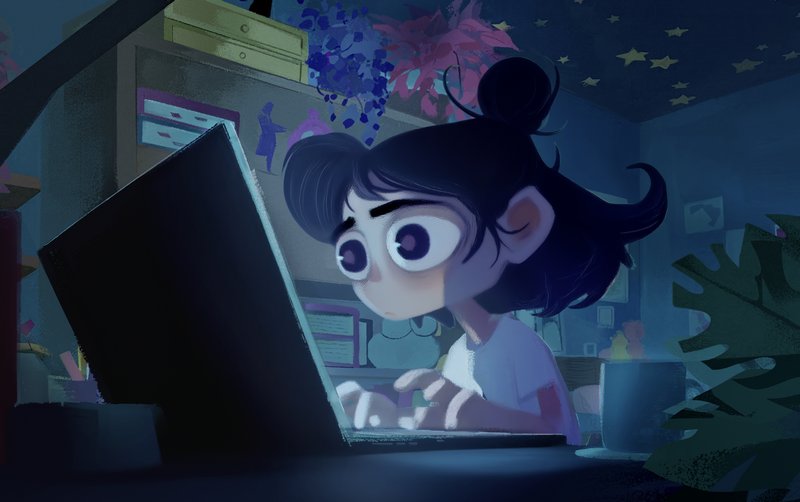
The film follows Ada (Márcia Mayer), an overworked and sleep-deprived young woman desperate for a full night’s rest. Aside from a handful of text messages exchanged with a friend before the evening unfolds, the animated short contains no dialogue. Instead, viewers are immersed directly into Ada’s increasingly exhausted state of mind as the noise from her upstairs neighbors grows louder, more relentless, and impossible to ignore.
As the chaos overhead escalates, Ada’s imagination begins to run wild. Ordinary sounds transform into elaborate fantasies and unsettling nightmares. Visions of vigilante justice collide with an aural assault of renegade treble clefs bursting from her neighbor’s stereo speakers. The line between reality and imagination steadily blurs, pulling Ada deeper into a world of noise she cannot escape. Her sense of control slips away as frustration gives way to simmering rage, creating a relatable portrait of the mental spiral that accompanies chronic exhaustion and the desperate need for a good night’s sleep.
Animation That Feels Like a Living Painting
The animation is easily the film’s greatest achievement. Vibrant, abstract and deeply expressive, the visuals transform a familiar annoyance into something both imaginative and emotionally resonant. The cacophony from the apartment above seeps through floors and ceilings, invading Ada’s sanctuary in visually inventive ways that make her panic and desperation palpable.
Blending traditional animation techniques with abstract expressionism and a graffiti-inspired aesthetic, every frame feels alive. Shapes shift, colors pulse and environments morph as Ada’s frustration intensifies. Without dialogue the film relies entirely on visual storytelling and sound design to communicate her emotional state. The immersive sound editing becomes a character in itself, placing viewers inside Ada’s sleepless mind where every creak, crash and bass-heavy thud feels impossible to escape.
A Different Conversation About AI
What makes Dear Upstairs Neighbors particularly noteworthy is the way it was created. The project brings together animation veterans, including director and Pixar alum Connie Qin He, production designer Yingzong Xin and a team of researchers and engineers from Google DeepMind.
Rather than using artificial intelligence to replace artists, the filmmakers trained custom versions of advanced generative AI models developed by Google referred to as “Veo” and “Imagen.” Using artwork created by the animation team, the artists established the visual style, drawings and creative direction while the AI tools helped translate those designs into fully realized animated sequences. The technology also allowed the filmmakers to quickly make adjustments and experiment with ideas without recreating entire shots from scratch. The result feels less of a showcase for AI and more of a demonstration of how artists can remain firmly in control of their vision while embracing new tools to expand creative possibilities. The film argues that technology works best when it serves an artist’s vision rather than attempting to replace it.
Should You Watch It?
Absolutely. Dear Upstairs Neighbors is worth seeking out not only for its inventive animation but also for the conversation it sparks about the future of filmmaking. For artists who are willing to look beyond the fear and outrage often surrounding AI, this short offers an interesting case study in collaboration between technology and human creativity. Knowledge is power and fear often thrives in misunderstanding. And with new technology like this, there is bound to be a healthy mix of fear and curiosity. Whether you’re a fan of animation, interested in emerging filmmaking tools or simply someone who has spent a sleepless night listening to an inconsiderate neighbor, Dear Upstairs Neighbors provides plenty to think about. It’s a clever and visually striking short that proves new technology doesn’t have to replace artists because in the right hands it can become another brush in the toolbox.